The Singapore National Employers Federation has sent seven key recommendations for Budget 2026. The organization wants more flexible foreign worker policies and better support for companies adopting artificial intelligence. This is not about business expansion anymore. Many companies are simply trying to survive and reorganize their operations.
SNEF Budget 2026: Business Outlook Shows Growth, but Confidence Remains Weak
MTI has upgraded Singapore’s GDP growth forecast for 2025 to around 4%, signalling macro-level resilience. However, conditions on the ground tell a more uneven story. According to SNEF’s latest employer surveys, 72% of businesses feel uncertain about their 2025 outlook, a sharp rise from 58% in 2024. Looking ahead to 2026, many employers are already planning hiring freezes and wage moderation. For SMEs in particular, mounting cost pressures are creating serious operational stress despite headline economic growth.
Rising Business Costs Are Tightening the Squeeze on Employers
Employers reported cost increases across nearly every major expense category. Key pressure points include higher employee salaries, rising CPF contribution rates, increased rentals, and escalating utility bills. These challenges are especially acute for SMEs and heartland businesses with thinner margins. In response, SNEF is calling for continued broad-based cost relief, with targeted support for rental and utility expenses to help smaller firms remain viable in a high-cost environment.


Foreign Manpower Constraints Are Leaving Critical Roles Vacant
A recurring issue raised during employer engagements is the inability to fill essential roles. Tighter foreign manpower policies, higher qualifying salaries for S Pass and Employment Pass holders, and ongoing local labour shortages have combined to limit hiring options. SNEF is advocating for greater flexibility for employers that adopt progressive employment practices, including structured flexible work arrangements and programmes to hire and retain senior workers. Potential measures include temporary quota adjustments or cross-deployment under the Manpower for Strategic Economic Priorities Scheme to keep operations running.
Managing Manpower Costs Without Resorting to Job Cuts
To help businesses control manpower costs while protecting local employment, SNEF proposed several calibrated adjustments. These include expanding approved source countries for Work Permit holders, introducing more sector-specific sub-quotas for industries facing acute shortages, and slowing the pace of qualifying salary increases for S Pass and Employment Pass holders. The goal is to provide companies with short-term breathing space without undermining local workforce priorities.
Supporting Senior Workers While Keeping Costs Sustainable
As Singapore’s workforce continues to age, employers increasingly rely on senior workers. However, higher wages and CPF contributions can make hiring older employees costly, particularly for SMEs. SNEF is seeking an extension of the Senior Employment Credit beyond 31 December 2026, along with tiered co-funding that provides greater support for SMEs employing lower-wage senior workers. The SEC currently supports employers hiring Singaporeans aged 60 and above earning under S$4,000 per month. SNEF also urged the continuation of the CPF Transition Offset beyond 2026 as CPF contribution rates rise again from January 2026.

Training Is Essential, but Downtime Costs Remain a Barrier
While most employers recognise the importance of workforce training, limited manpower makes it difficult for lean teams to release staff for extended courses. Operational disruption remains a key concern. To address this, SNEF proposed extending support durations for Career Conversion Programmes, introducing absentee payroll funding, and reimbursing study leave for intensive training. Covering downtime costs could significantly increase employer participation in upskilling initiatives.
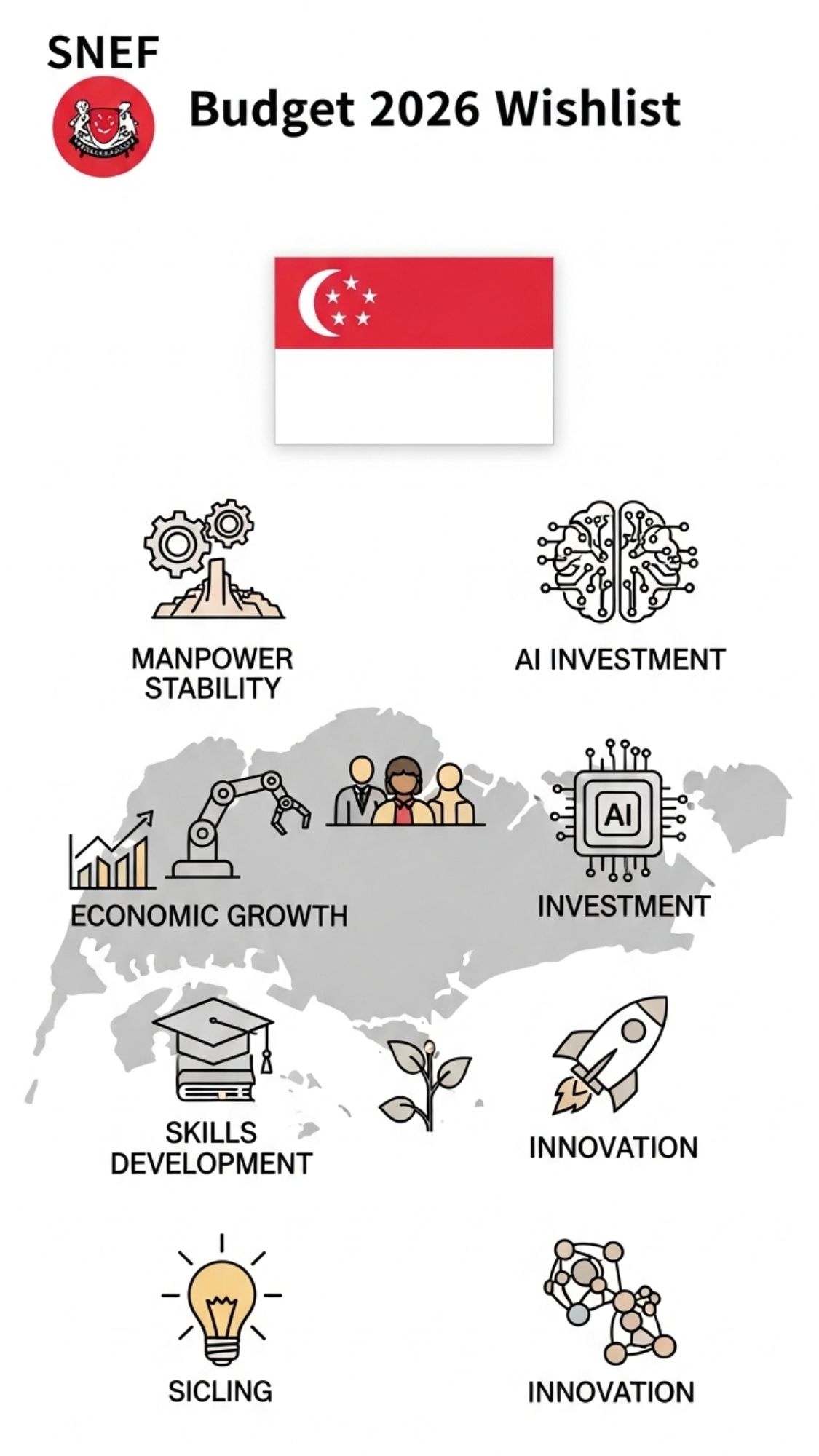
AI Adoption Brings Promise, but SMEs Need Practical Support
Interest in artificial intelligence is growing, but many SMEs remain uncertain about where to begin. Common challenges include high implementation costs, lack of in-house expertise, and confusion over suitable tools. SNEF recommended expanding support for simple, plug-and-play AI solutions, enhancing grants that cover both technology adoption and employee reskilling, and promoting workforce-wide AI literacy and responsible AI use. For most businesses, the focus is on practical gains in efficiency and cost savings rather than advanced experimentation.
Progressive Wages and Workplace Support Must Continue
As the Progressive Wage Model expands and wage floors increase, SNEF is calling for the Progressive Wage Credit Scheme to be extended beyond 2026. Continued co-funding is needed to help employers meet wage commitments sustainably. SNEF also proposed additional short-term staffing support for sectors with limited flexibility, particularly to meet workplace safety requirements, mental well-being initiatives, and workplace fairness practices.